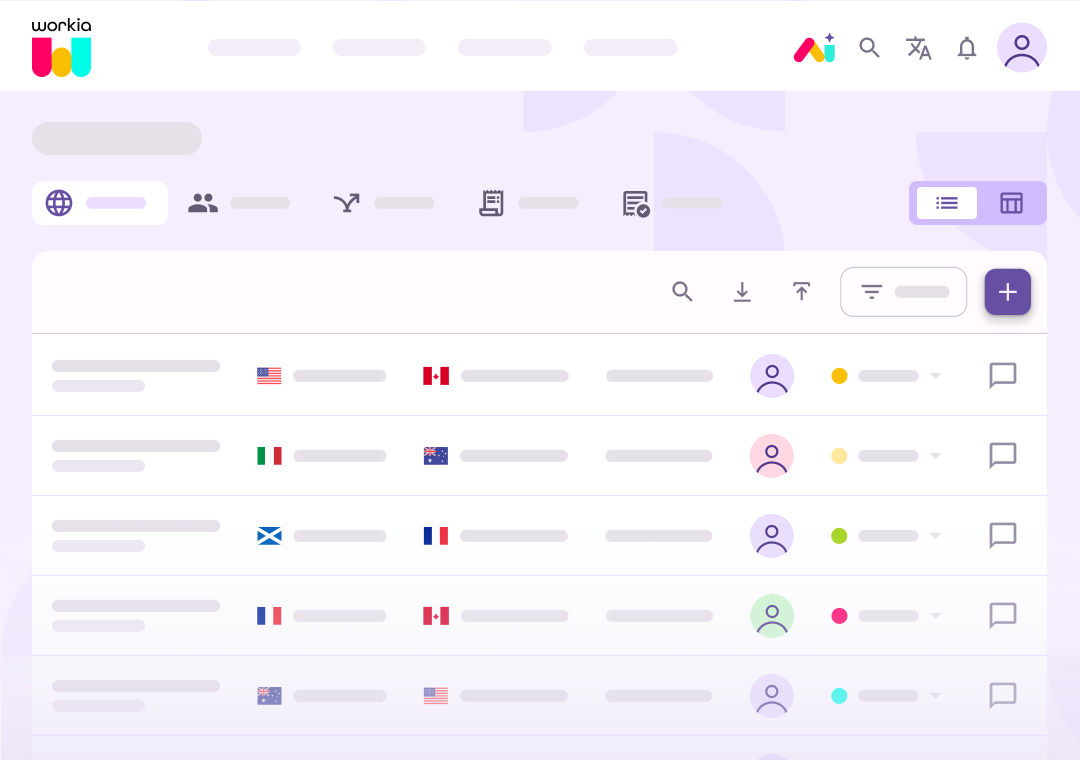

What is global mobility technology?
Global mobility technology helps mobility and HR teams manage an employee or new hire's move from A to B — whether it's one-way, return, international or domestic. Think of it as the operating system for your mobility programme: one place for cases, checklists, approvals, documents and data.
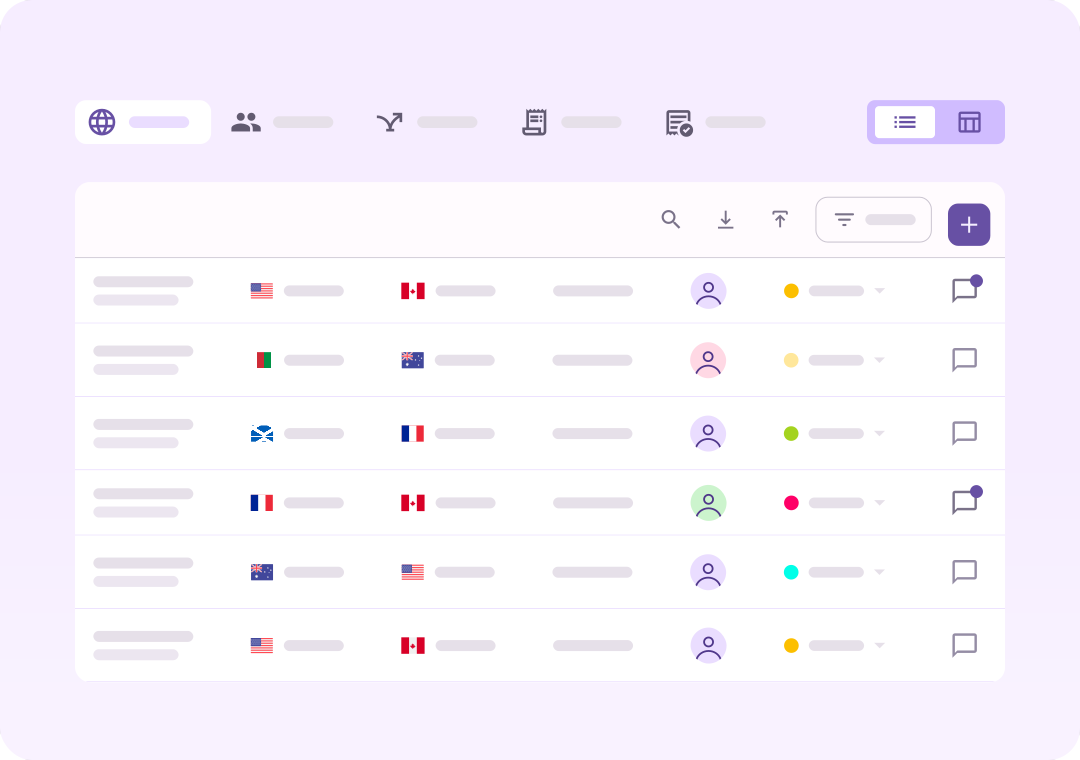
How can mobility technology help?
Organize data
Track the details of every move — one way, assignment, short term, rotators and more — in a single, structured record.
Avoid surprises
Get reminders for end dates, visa expiries and overdue tasks before they become a problem for the employee or the business.
Store documents
Keep agreements, letters and supporting paperwork attached to the case they belong to — secure and searchable.
Manage tasks
A checklist for each move type guides the team through the process step by step, so nothing gets missed.
Track services
Instruct suppliers and track what's been requested, what's in progress and what's been delivered.
Interrogate data
Visualise and report on your programme to spot bottlenecks, gaps and peaks — without a manual data pull.
Manage costs
Estimate the cost of a move up front, then track actual spend and exceptions against it as the case progresses.
Create payroll
Calculate allowances and generate payroll instructions so pay-impacting changes flow through cleanly.
Move to mobility tech — without the project.
Workia helps mobility teams move to technology for the first time. It's straightforward, with no implementation or complex setup — just three things done well.
Centralize data
A modern home for everything currently spread across spreadsheets, emails and documents. Secure, searchable and reportable — in one place.
Collaborate
The whole team works from the same case. See what's due, view recent activity and share comments without hopping between tools.
Automate
Create emails and documents from templates, set reminders for tasks, and get alerted when an immigration document is about to expire.
7 reasons to stop managing mobility in spreadsheets
Most mobility teams start with a spreadsheet and a shared inbox. That works — until it doesn't. These are the signals that it's time to move to purpose-built mobility technology.
Data at risk
Sensitive employee data in spreadsheets? It's a click away from falling into the wrong hands.
Lost documents
Raise your hand if you've ever lost a document. Now, imagine losing a contract, or relo letter. Scattered across drives, finding them can feel like a treasure hunt — minus the fun.
Missed deadlines
Deadlines are sneaky; miss one, and it's a domino effect. Forgot to submit an immigration renewal on time? Hello, delayed moves and frustrated teams.
Oops, wrong country!
Ever had a 'whoops' moment typing up a relocation letter? Accidental typos can turn a smooth move process into a logistical nightmare.
Who's approved what?
Tracking approvals through emails is like finding a needle in a haystack. Without a clear trail, managing what's been approved by who becomes a guessing game.
Team member away?!
When someone's away, details get lost. Team gaps mean workflow disruptions — and no one's sure where the last case left off.
Budget surprises
Spreadsheets and big data calculations? It's a mix-up in the making, often making cost estimates dubious, not to mention confusing.
Workia vs spreadsheets
See the side-by-side of what changes when you swap spreadsheets for purpose-built mobility tech.
Purpose-built beats general-purpose
HRIS platforms handle the employee record. Ticketing tools handle questions. Mobility technology handles the move itself — the case, the process, the documents, the vendors and the compliance trail — end-to-end.
Ready to make global mobility easier?
See Workia in action. Book a guided walkthrough or jump straight into a self-serve product tour.